Author: Tyler Mashek
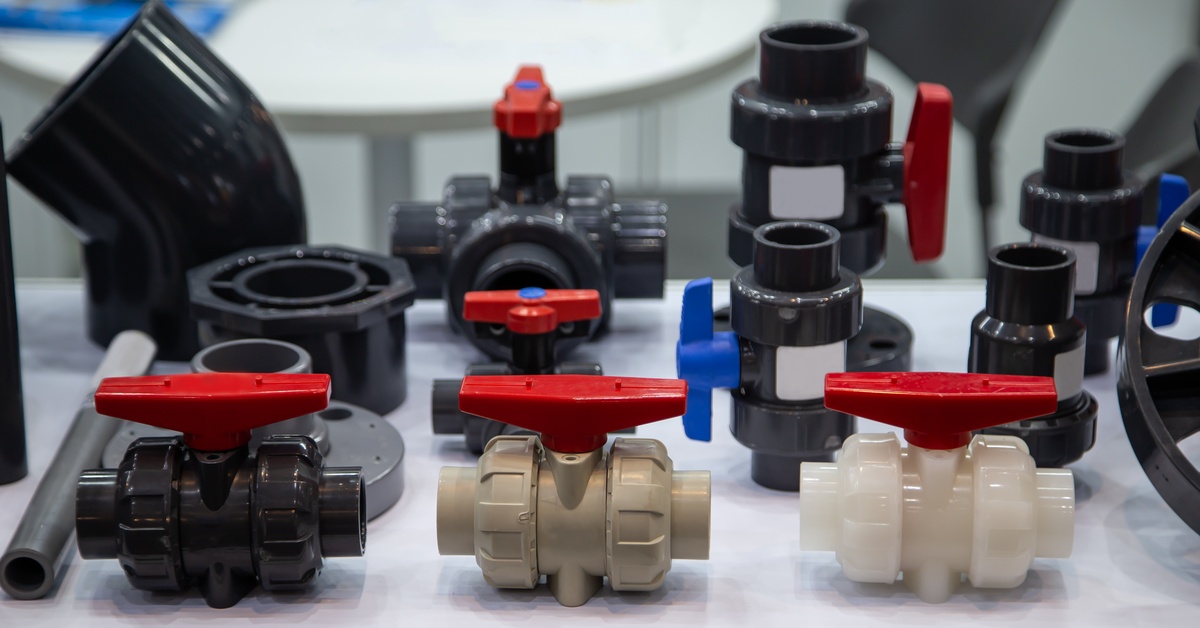
Industrial fluid handling systems rely heavily on the integrity of their components. When transporting aggressive chemicals, acids, bases, or solvents, the failure of a single valve can lead to catastrophic system shutdowns, safety hazards, and costly repairs. While metal valves offer strength, they often succumb to corrosion. Plastic valves, conversely, provide exceptional resistance to a wide array of corrosive substances, making them a preferred choice for chemical processing, water treatment, and agricultural applications.
Engineers and system designers must understand that "plastic" is not a monolithic category. Different polymers exhibit vastly different responses to chemical exposure. Selecting the correct valve material requires a deep understanding of how specific polymers interact with fluids under varying conditions of temperature, pressure, and concentration. Here we’ll explore the technical nuances of chemical resistance in plastic valves to aid in precise material selection.
Chemical resistance refers to a material's ability to retain its physical and mechanical properties while in contact with a specific chemical. For plastic valves, chemical attack typically occurs through three primary mechanisms: solvation, reaction, and absorption. Solvation involves the penetration of the chemical into the polymer matrix, causing swelling, softening, and eventual dissolution. Reaction involves a chemical change in the polymer chain, such as oxidation or hydrolysis, which degrades the material's molecular weight and strength. Absorption allows fluids to permeate the plastic, potentially leading to discoloration or dimensional changes without necessarily causing immediate structural failure. Understanding these mechanisms helps operators predict how a valve might fail.
The molecular structure of a polymer dictates its inherent resistance profile. Crystalline polymers, which have a highly ordered molecular arrangement, generally offer better chemical resistance than amorphous polymers, which have a random molecular structure. The tightly packed chains in crystalline plastics impede the permeation of small chemical molecules. This structural density is why materials like PTFE (polytetrafluoroethylene) exhibit near-universal chemical inertness. When evaluating valve materials, one must consider the crystallinity and cross-linking of the polymer, as these factors directly influence how the material withstands aggressive media.
Temperature acts as a catalyst for chemical degradation. A plastic valve that performs flawlessly with a specific acid at room temperature may fail rapidly if the fluid temperature rises by just 20 degrees Fahrenheit. Heat increases the kinetic energy of the chemical molecules, accelerating their diffusion into the polymer matrix. Furthermore, elevated temperatures reduce the mechanical strength of thermoplastics, making them more susceptible to swelling and stress cracking. System designers must consult temperature-derated compatibility charts rather than relying solely on ambient temperature data.
The concentration of a chemical solution significantly alters its aggressiveness. Surprisingly, higher concentrations do not always equate to greater damage. For instance, some plastics may resist concentrated sulfuric acid but degrade when exposed to lower concentrations due to the presence of water, which can trigger hydrolysis. Conversely, oxidizing agents typically become more destructive as concentration increases. Accurate valve selection demands specific data regarding the exact concentration of the fluid in the system, rather than general categorizations of the chemical.
Polyvinyl Chloride (PVC) remains the most common material for plastic valves due to its balance of cost and performance. PVC exhibits excellent resistance to weak acids, alkalis, and salts. However, it demonstrates vulnerability to ketones, esters, and chlorinated hydrocarbons. PVC valves function well in general water applications and mild chemical processing but possess a relatively low maximum service temperature compared to other engineering plastics. The material creates a rigid, durable barrier against oxidation, making it suitable for many oxidizing acids.
Chlorinated Polyvinyl Chloride (CPVC) shares the basic chemistry of PVC but undergoes a chlorination process that increases its chlorine content. This modification boosts the material's heat distortion temperature and chemical resistance. CPVC valves maintain structural integrity at temperatures where standard PVC would soften and fail. They offer superior handling of hot corrosive liquids and show enhanced resistance to many acids and bases. Industrial applications involving hot water or hot chemical lines frequently utilize CPVC to prevent premature thermal degradation.
Polypropylene (PP) serves as a lightweight, versatile option with a broad range of chemical resistance. It handles sulfur-bearing compounds, caustics, and solvents better than PVC. Often, manufacturers reinforce this material with glass fibers to improve strength and dimensional stability. For example, Banjo valves frequently utilize glass-reinforced polypropylene to deliver durability in agricultural and industrial chemical transfer applications. This polymer resists stress cracking and offers a higher service temperature than polyethylene, making it a staple in fertilizer and pesticide handling systems.
Polyvinylidene Fluoride (PVDF) stands out as a high-performance fluoropolymer. It creates an extremely tough, abrasion-resistant valve body that withstands halogens, strong acids, and organic solvents. PVDF maintains high purity, meaning it does not leach contaminants into the process fluid, a critical requirement for semiconductor manufacturing and pharmaceutical processing. While more expensive than PVC or PP, PVDF delivers reliability in environments where other plastics would degrade rapidly due to aggressive chemical attack or UV radiation.
PTFE, commonly known by the trade name Teflon, offers the highest level of chemical resistance among standard valve materials. It remains inert to almost all industrial chemicals, solvents, and acids, with very few exceptions like molten alkali metals or elemental fluorine. Valve manufacturers often use PTFE for seals and seats within valves made of other materials to ensure the critical sealing surfaces survive contact with the process fluid. Its low coefficient of friction also reduces the torque required to operate the valve, extending the lifespan of actuators and handles.
Chemical resistance involves more than just the interaction between the fluid and the plastic surface. Environmental stress cracking occurs when a plastic material is under tensile stress while exposed to a chemical agent that does not attack the polymer chemically but facilitates crack formation. This physical phenomenon can cause unexpected brittle failure in valves that appear chemically compatible on paper. External stresses from piping misalignment, overtightening of flanges, or thermal expansion can combine with mild chemical exposure to trigger ESC. Engineers must reduce mechanical stress on valve bodies to maximize their service life.
Data sheets and compatibility charts provide a starting point, but they cannot replicate every variable of a real-world application. Mixtures of chemicals often behave differently than pure substances. Detailed testing under actual process conditions remains the most reliable method for validation. Submersion testing, where a sample of the valve material sits in the process fluid at the operating temperature for an extended period, reveals potential swelling or weight change. Conducting these tests ensures that the chosen valve will perform safely and reliably over its intended lifespan.
The successful operation of a fluid handling system depends on the meticulous selection of its components. Plastic valves offer robust solutions for corrosive environments, provided the specifier understands the limitations and capabilities of each polymer. By analyzing temperature, concentration, mechanical stress, and the specific chemical nature of the fluid, engineers can deploy valves that ensure safety and efficiency. Ignoring these variables invites leaks, failures, and hazards.