Author: Tyler Mashek
Industrial pump equipment plays a major role in keeping demanding jobs moving. Whether you handle wastewater, septic service, hydro excavation, municipal work, or another pumping application, the right equipment can improve productivity and help your crew avoid unnecessary downtime. The wrong setup can create headaches ranging from poor performance to premature component wear.
Before you buy a pump, you need to look beyond price and basic specifications. Flow requirements, operating conditions, pump type, materials, maintenance needs, and supporting equipment all affect how well a system performs. Taking time to understand these factors can help you choose equipment that fits the work you actually do.
Every pump purchase should start with one question: What does the equipment need to accomplish?
Industrial pumping covers a huge range of applications, and equipment that works well for one job may perform poorly on another. A contractor moving clean water faces very different requirements from a septic operator working around wastewater. Your application determines which pump design, materials, capacity, and accessories make sense.
Consider the material you need to move, the distance it needs to travel, and the conditions surrounding the equipment. These details provide a much stronger starting point than choosing a pump based only on horsepower or price.
The word "pump" covers equipment that works in very different ways. Before comparing models, make sure you understand which pump type fits the application.
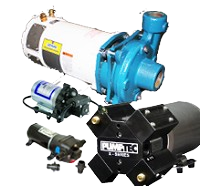
A water pump directly moves liquid through its system. Depending on the design, components such as an impeller or diaphragm move the liquid and create the pressure necessary to send it where it needs to go.
A vacuum pump works differently. It removes air from a tank to create negative pressure. When the operator opens the valve, material moves toward that lower-pressure environment, while a properly operating vacuum pump handles air rather than the material entering the tank.
Knowing that distinction can prevent you from comparing equipment that serves completely different purposes.
Flow rate tells you how much material a pump can move within a specific period. Choosing enough flow capacity matters because an undersized pump can slow down the entire job.
However, more flow does not automatically make a pump better. An oversized pump may add unnecessary cost or create a poor match with the rest of your equipment. Look at what your operation actually needs instead of simply choosing the highest available rating.
Think about your typical workload as well as occasional demanding jobs. You want enough capacity to handle normal operations comfortably without buying far more equipment than you can realistically use.
Pressure matters especially when you choose equipment that pushes water or another liquid through a system. The pump needs enough capability to overcome resistance and deliver useful performance at the discharge point.
Hose length, elevation changes, restrictions, fittings, and other system components can influence pressure requirements. The rating on the pump alone does not tell the whole story.
Look at the complete system when comparing equipment. A pump needs to perform under your actual working conditions, not just under ideal test conditions.
The material passing through a pumping system can quickly narrow your equipment choices. Clean water creates different demands than wastewater, sludge, or liquids that contain solids.
Ask how much debris or solid material the system may encounter and whether the pump design can handle it. Also consider whether the liquid could affect seals, hoses, or other components.
Ignoring the characteristics of the material can lead to clogs, accelerated wear, or equipment damage. Matching the equipment to the material helps you protect the pump while keeping the job moving.
A pump never works completely on its own. Hoses, valves, couplings, tanks, controls, and other components all affect system performance.
Before purchasing equipment, check whether the pump will work with your existing setup. Connection sizes and component compatibility deserve attention early in the process. Discovering that your new equipment does not match your hoses or pipe fittings after it arrives creates an avoidable problem.
Looking at the system as a whole also helps you identify accessories or replacement components you may need before installation. That preparation can make the transition to new equipment much smoother.
Industrial equipment often works in conditions that would make lighter-duty equipment wave a white flag. Heat, moisture, vibration, dirt, chemicals, and regular handling can all take a toll.
Pay attention to the materials manufacturers use for pump housings, internal components, seals, and other high-wear areas. The appropriate construction depends on the application, so avoid assuming one material works best for every job.
Durability also extends beyond the pump itself. Mounting points, connections, controls, and exposed components need enough strength to withstand the conditions your crew encounters.
Maintenance can make the difference between equipment that supports your operation and equipment that constantly interrupts it. Before buying, find out what routine service the pump requires.
Important maintenance considerations include:
A straightforward maintenance routine makes it easier for operators to catch small problems before they turn into expensive failures. Easy access to common service points can also reduce the time technicians spend working on the equipment.
Even durable industrial pumps eventually need service. Seals wear, components reach the end of their useful life, and unexpected damage happens on working equipment.
Before choosing a pump, check whether you can readily source the parts you will need. A minor repair becomes a much bigger issue when the necessary component takes weeks to arrive.
Parts availability becomes especially important for equipment that supports daily operations. Keeping common wear items on hand can also help your crew respond quickly when routine repairs come up.
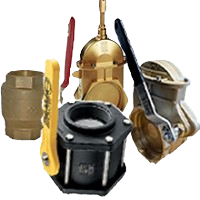
The pump may get most of the attention, but the connections around it matter just as much. Incorrect hose sizes or incompatible connections can restrict performance and create unnecessary complications.
Confirm the inlet and outlet sizes before ordering equipment. Check the hoses, couplings, valves, and adapters you currently use and determine whether they match the new setup.
Also consider how workers connect and disconnect equipment in the field. A practical connection setup can save time on jobs where operators regularly move hoses or switch between equipment.
Think about where the pump will operate rather than focusing only on what it will move. A pump that works in a controlled facility may face very different challenges on a vacuum truck or outdoor jobsite.
Temperature, weather, dirt, moisture, vibration, available space, and accessibility can all influence equipment selection. Mobile operations also need to consider weight, mounting, and how easily workers can reach service points.
The best equipment choice should fit both the pumping application and the environment surrounding it.
Buying industrial pump equipment requires you to understand the application, material, flow, pressure, operating environment, connections, maintenance demands, and supporting components before making a decision.
Take the time to match the equipment to how your operation actually works. A well-matched pump can support reliable performance, simplify maintenance, and reduce avoidable downtime. When you evaluate the complete pumping system rather than the pump alone, you put your crew in a much better position to keep jobs running smoothly.